Showing posts with label innovation. Show all posts

Saturday, 6 June 2015

Toast, Toast, Master

Hello!

Since I've attended three Toastmasters meetings as an official guest, I now have to pay to play. You get three official visits as an individual to a Toastmaster group before you have to officially join.


From winning two 'Table Topic' sessions I was uncertain whether I needed to do this, riding a high of confidence following my previous sessions was I already a competent speaker? Potentially. However I need to understand how to speak better in public and slay my nervousness.

So, I've decided to officially join the Toastmasters group and work through their course to become a competent communicator. One day that ribbon will be mine!
 
So what lies ahead for me when I embark on this Toastmaster journey?

'Toastmasters International's Competent Communication contains 10 speech projects each focusing on a specific area, such as organizing your speech and using body language. An evaluator offers feedback on each of your speeches, helping you to improve. Earn a Competent Communicator award by completing all the speech projects in Competent Communication.'
http://www.toastmasters.org/en/Shop/Education/Manuals/communication-track/Competent%20Communication_225.aspx

  • Speech 1: The Ice Breaker — The first speech of the Toastmasters program is about introducing yourself to your peers, providing a benchmark for your current skill level, and standing and speaking without falling over.
  • Speech 2: Organize Your Speech — Introduces the basic concepts of organizing a speech around a speech outline.
  • Speech 3: Get to the Point — Clearly state your speech goal, and make sure that every element of your speech focuses on that goal.
  • Speech 4: How to Say It — Examines word choice, sentence structure, and rhetorical devices.
  • Speech 5: Your Body Speaks — Shows how to complement words with posture, stance, gestures, facial expressions, and eye contact.
  • Speech 6: Vocal Variety — Guides you to add life to your voice with variations in pitch, pace, power, and pauses.
  • Speech 7: Research Your Topic — Addresses the importance of backing up your arguments with evidence, and touches on the types of evidence to use.
  • Speech 8: Get Comfortable With Visual Aids — Examines the use of slides, transparencies, flip charts, whiteboards, or props.
  • Speech 9: Persuade With Power — Discusses audience analysis and the different forms of persuasion available to a speaker.
  • Speech 10: Inspire Your Audience — The last of ten speeches, this project challenges the speaker to draw all their skills together to deliver a powerful inspirational message.
http://sixminutes.dlugan.com/toastmasters-speech-0-competent-communicator/

10 speeches, each interesting, challenging and terrifying.
 

Wish me luck!

AT

Tuesday, 2 June 2015

Thinking Digital Wrap Up

Hello!


For this post I thought I'd wrap up my Thinking Digital 2015 experience in one handy post, with links, top takeaways and all that jazz. I was able to listen to some thought leaders in the digital landscape. Speakers included professors on machine learning, hacktivists, startups and even a Technical Director from Pixar.


Whilst I could exhaustively list off everything I learned at the conference it'd likely be a very long list of nerdy things that may not make for the most interesting blog post. So as a happy alternative I'll leave the link to the sessions which you can view in full, including the Reframed.tv comments.


So, what did I learn?

The digital future:
  • There is a serious boom in the tech market and it's only going to continue to grow; whilst Moore's law may be proving true at the moment, physics say that advancement has to slow from it's current rate.
  • Digital solutions are continuing to replace tasks undertaken by people - automation is going to continually improve efficiency
    • An unforeseen impact of an automated future is the impact on the job market - if we all live in a digital world automated by machines, how will people earn a living?
  • The digital future ran by machines may not necessarily be what we imagined from 'The Jetsons'.
    • Robots will be part of our daily life, but then again they already are. A Roomba for all intents and purpose is a vacuum robot, it is capable of doing one task, automatically, and to a high standard. Whilst the Roomba is a robot that can 'think' it is not able to think of anything other than the task it was designed for.
      • The Roomba is not going to make you a cup of coffee, nor is it going to try to kill you whilst you sleep.
      • Our robotic and automated future will consist of many machines that can do a limited set of jobs, but do them quickly and to a high standard

Agile principles are spreading:
  • Most speakers alluded to agile development without mentioning the process outright
  • The idea of iterative development of services is exciting to many as they can interact with customers during the process to help them build a product consumers actually want
    • If you build a product, are you sure your targeted customer wants it? If they do, does your vision match their needs?
      • It is better to find out what your customer requires and use their needs to develop a product throughout the development process as opposed to finishing a masterpiece that nobody wants.
  • Consistent user testing allows creators to understand their choices, whilst not everyone can test, everybody should be invested in the outcomes of the research
  • The Government Digital Service envisages a future where a service becomes a platform unto itself with functional services.


Boring is awesome:
  • Linked to the agile principles, boring is awesome and should be a basic goal for everyone. When you think about what boring is; is it actually a bad thing?
    • Boring things work exactly how you think they do
    • Boring things are reliable
    • Boring things have no nasty surprises
    • Boring things are accessible
    • Boring things have an easy point of entry
    • Boring caters for an essential need
  • We could make a really cool interesting product that was half functional and really complex, but would that suit our customer?
    • I’d rather have a functional Nokia 3310 than a faulty Blackberry, would you?
  • Just because something is boring does not mean it can’t become more interesting and exciting down the line,

STEM education is going to explode:
  • STEM is growing at a fantastic rate within schools with coding being pushed front and centre combined with the Internet of Things.
  • A problem that has previously stunted the growth of coding in schools is finding a method to truly engage students and teachers. Showing physical changes such as lights changing colour, robots moving or even live coding music can help engage and motivate everyone to code.
  • STEM education is going to become more diverse with teachers and students gaining access to new tools and free open source programmes to encourage to get involved in coding.
    • With this in mind it is clear that ed tech companies may need to review their approach to STEM assessment and cater for the new classroom.

Play with everything:
  • If you can do it, why not?
  • In direct contradiction to what I said earlier, maybe boring isn’t so good. Maybe we should play with everything and be open to experimenting with concepts, tools and theories to see things in new ways. For example, data visualisation can be shown in incredible ways if we just separate ourselves from conventions.
    • 3D printed jewellery of the weather forecast?
    • Facebook interactions charted and interpreted into a hopscotch board
  • Small playful changes help you stand out from the crowd.
    • Basic experimental tweaks to UX can engage a customer competitors don’t
      • A hidden animated owl on a website added mystery and kept user engagement to ensure visitors stayed on that webpage
  • Subverting expectations whilst meeting all criteria to provide a service can unlock a new engaged and loyal customer base.
    • Google’s doodles, how many times do you click on a doodle to learn something about a subject you know nothing about
    • #LJTunes mashes together songs with contrasting genres to bring new music to life
  • Whilst you can play with products, expectations and services, don’t forget to have fun within your teams. A positive competitive atmosphere allows individuals to excel.
  • A key point to remember is to try and enjoy what you do as it will be a good tool to get others to buy in. Just do it, and if it doesn’t work try something else.

So there we go; an awesome, inspiring and intelligent conference highlighting how individuals will interact in the future. Tech is spreading but the principles behind the growth remain familiar:
  • Build with the customer in mind
  • Be flexible
  • Experiment
Thanks for reading!
AT

Saturday, 23 May 2015

Thinking Digital: Part Two, Innovation Street

Hello!

For the next part of my Thinking Digital 2015 breakdown I'm looking to review the speakers who spoke on innovation. Now most if not all the speakers spoke on innovation, so to narrow the field and make this blog post smaller than 100,000 words I'm focusing on innovation in the home and local spheres.


There was no better speaker on home innovation and making the Internet of Things accessible to individuals than Andy Stanford Clark. Currently a visiting professor at Newcastle University and a master inventor at IBM, Andy has shown incredible creativity and invention approaching problems with insightful and fun solutions.


The talk consisted of trying to understand life's problems or things you wish to achieve and from there review how you can achieve your goals, from solutions to eliminate the mundane and improve lifestyle, to time and money saving systems with actual impact on human lives.

One of the core conceits of the talk was that innovation truly begins at home, Andy's own ingenuity was sparked as a child when attached a moisture detector to a buzzer and hung it outside on his washing line at home. This was so that whenever it would rain the buzzer would sound to alert the people in the house to bring the laundry in.

Andy argues throughout his talk that we have reached a point now where it is easy for anyone to make a computer and understand how to create devices and functionality through logic. Computers are now cheap and accessible to vast swathes of people, the Raspberry Pi computer allows for a simple coding interface with its low price making it an easy point of entry.
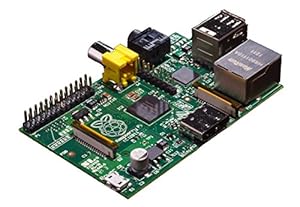


The talk continues where Stanford Clark shows how innovation can be used in a world embracing an Internet of Things slowly leading us to where it can actually significantly impact people's lives. Using a simple computer you can create an electricity usage calculator which can allow individuals to work out how much money they're spending on appliances throughout the year. Created in a classroom with a raspberry pi and a ping pong ball with watt detector the 'Orb of Awesome' changes colour depending on how much energy is being used. Whilst these devices already exist Stanford Clark shows that this is just one area which can be improved on and often more importantly, provide direct agency to those involved to make them engaged. He has even taken this further by automating a Twitter feed directly from his house which documents his energy usage on a daily basis. Through his own tinkering Andy discovered that the clock in the microwave actually consumes more energy throughout the year than the function the appliance was designed to do.

With the new internet of things we have the ability to create many functions at different levels. With more accessible technology we must bear in mind the following:
  • Instrumented
  • Interconnected
  • Intelligent
With the data collected we achieve actionable insight to help design systems to help people. This can be through time saving, saving money or automating the world to make it much more interesting. It turns out you can build a better mouse trap, Andy did, and when it triggers it sends a grave stone emoji to his phone.


Using this technology on a wider scale can let people know when a ferry arrives, when aid arrives to a natural disaster or just how to save money on a fuel bill. We are entering a new age of innovation, and everyone can get involved.


Tony Hey continued the theme of innovation by charting the ages of technology. Hey argues that there have been three ages of computing.
  • 1950s
    • Simulation
      • ENIAC- massive military machine
      • Communication in simulation era
      • IBM mainframe era
      • Computers are the size of tanks
  • 1980s
    • Communication
      • Personal computing
      • Connection to printers
      • Personal programming
      • Precursor to home computers today
      • Killer app - spreadsheets
      • Communication killer app - email
    • Second step within the age
      • Internet
      • Use of system to complete function
      • Communication is important in what it leads to
      • Natural progression from Moore’s law of natural growth
      • New algorithms and natural growth
  • 2010s
    • Simulation 
      •  Internet driven cars
      • Assisted technology
      • Automated systems on existing infrastructures
      • Gathering actual insight from data as opposed to data collection
      • Algorithms become even more intelligent
In 1971 first microprocessor was created for a calculator, when it was ordered the calculator company asked for a different type of chip in each calculator, however the designers decided to be more ambitious whilst saving money at the same time, they decided to insert the same chip in each calculator, just program it in different ways. The way the chip worked allowed each system to utilise it differently, despite being able to be utilised in different ways, the chip itself was not intelligent.

Hey leads us on to the topic of AI and the possibilities within. Is it strong or weak? Is artificial intelligence capable of intelligent design - analysis and insight? Hey argues it is more likely to only be capable of brute force, in that it can do simple logical tasks well and do them fast, however it can't actually think, imagine it if you will as a passionate photocopying clerk as opposed to an executive.

IBM Watson won Jeopardy! but it had no idea it had won, as it does not understand the concept of winning. Automation is not intelligence. Is it conceivable that we create a self aware AI? It is incredibly unlikely but not impossible. Hey argues that Moore’s law cannot go on forever, physics say it will fizzle and level out with us reaching the peak of robotic innovation and automation soon.


More updates from my Thinking Digital experience soon!
AT