Showing posts with label atlas shrugged. Show all posts

Sunday, 21 June 2015

Atlas Shrugged: Part 4 - Cultural Impact

Hello!


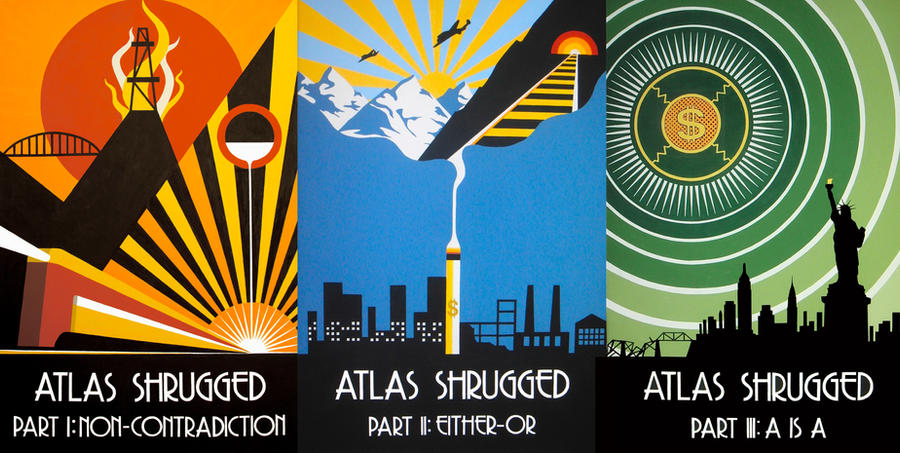
To hopefully conclude my posts on 'Atlas Shrugged' I thought I would look at the cultural influence Rand's text and ideology has had on the world and the pop culture emerging after.

There are two novels that can change a bookish fourteen-year old’s life: The Lord of the Rings and Atlas Shrugged. One is a childish fantasy that often engenders a lifelong obsession with its unbelievable heroes, leading to an emotionally stunted, socially crippled adulthood, unable to deal with the real world. The other, of course, involves orcs.
http://krugman.blogs.nytimes.com/2010/09/23/im-ellsworth-toohey/?_r=0 

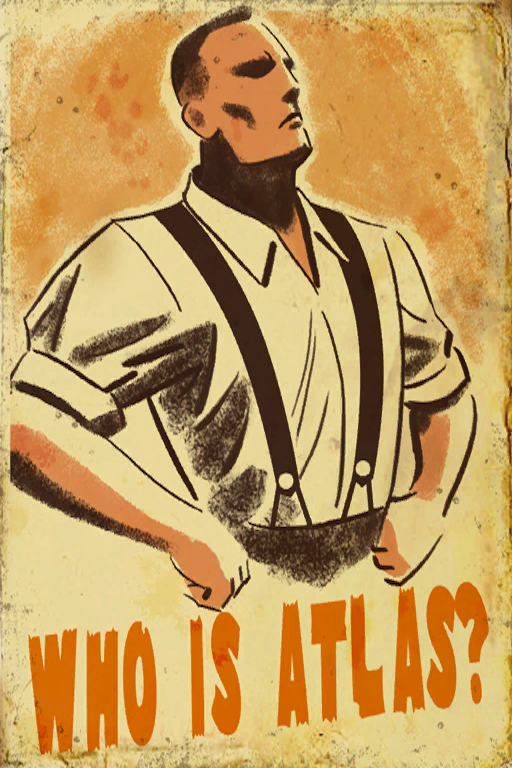
Rand's work has been seen as a calling card for a generation of libertarians, unfortunately with many taking them literally. The call of 'Who is John Galt?' a key calling in the book has been adopted by many in the Tea party as a call to bigger industry and small/non-existant government.

Cultural behemoth 'The Simpsons' has had numerous references to Rand and 'Atlas Shrugged' in numerous ways;
'“Conservatives only get more conservative because each year they get a little further through Atlas Shrugged.”

The importance of Rand's influence can't be denied, if you agree with her work it's enlightening and a penny-drop moment. If you don't agree with it, it's infuriating and a terrifying moment where you believe others will believe this. To me, one the of the greatest deconstructions of the text is the 2007 game 'Bioshock'.
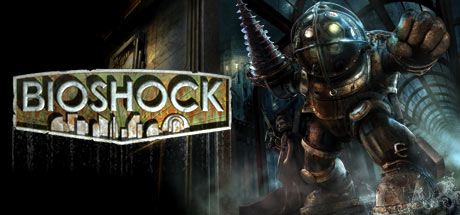


BioShock, a critically acclaimed 2007 video game, is widely considered to be a deconstruction of Atlas Shrugged. The story depicts a collapsed Objectivist society, with the player learning of how it fell apart after the fact. Significant characters in the game, such as Atlas and Andrew Ryan (a play on the name Ayn Rand), owe their naming to Rand's work. When asked about the influences for BioShock, the creator of the game, Ken Levine, replied, "I have my useless liberal arts degree, so I've read stuff from Ayn Rand and George Orwell, and all the sort of utopian and dystopian writings of the 20th century, which I've found really fascinating."
https://en.wikipedia.org/?title=Atlas_Shrugged#cite_note-75

Whilst not only being an incredibly immersive and entertaining game, it's a very clever and critical story, heavily engaging players in topics beyond simple gun-play. The beauty and grandeur of an actual Altantis city beneath the seas, and the hell for the people inside. Rapture, the game's location is a perfect mix of the critique, beauty and chaos an objectivist society could create.

What do I think of 'Atlas Shrugged'? It's interesting, whilst not the most engaging story, it does have passionate ideas and interesting approaches to the potential of the individual and their agency. However, I can't read it wholly without critiquing it heavily on its problems, including the lack of any empathy, compassion and human rights.

Thanks for reading!
AT

Atlas Shrugged: Part Three - Dystopian Problems

Hello!


For the positive message that 'Atlas Shrugged' may have for the individual it is wrapped in an incredibly grim and nasty package. There are horrible issues involving those who do not have the opportunity to produce and Rand seems completely mesmerised with the idea of the middle class and its agency.

What of the weak or the infirm? Are they supposed to rely on the often unforthcoming charity of the rich producers? The tyranny of the market is something that we are all too aware of post-2008 and you need to wonder what would happen if Rand's supporters were in charge of the recovery of the market.
Rand's text also confuses the nature of man, you are seen as either a producer or a looter, with no middle ground. In Rand's text you are saint or sinner, wholly depending on your ability to produce. When those who produce, and produce better than all others believe that they feel cheated, they withhold their labour until they feel appreciated.
Of course we can't talk about 'Atlas Shrugged' without the thorny issue of consent in the book. Sex is seen as the one thing distant from labour and dissolved as pure passion, so far so good, but then it gets a bit darker. Whilst rape isn't promoted, the consent of women isn't necessarily sought. This leaves a sour taste in the mouth and out of all the things you can discuss around 'Atlas Shrugged', the issue of sex and power is one of the most dated and grim things.

Thanks for reading!
AT


Atlas Shrugged: Part Two

Hello!

As we continue with our deconstruction of 'Atlas Shrugged' I think it may be best to see what people enjoy and support about the journey of Dagny.

We have a strong female protagonist, who takes on the male dominated world. The book argues for the strength of the individual and the positives of work and labour. You can pull much from the book and view the power of an individual or small group taking down a huge system.

If not taken literally the themes of 'Atlas Shrugged' can be viewed positively, as long as you retain some kind of humanistic interpretation behind it. Of course taken literally, the socially responsible liberal may balk at the messages but the themes can be reduced on a personal level. Just do it.

Just do it, and do it for yourself. You are the one in control of your own destiny and with that you can do anything you can imagine.

Imagination can be our only limits and to achieve the impossible we must only take our first few steps.
 
The power of the individual is incredible and as such can change the world, one should not rely on the kindness of others and instead use their own labour to shape their destiny.

Now, not everyone may agree with those positives from 'Atlas Shrugged' and I can assure you I don't agree with everything in that book, and rightly it has been critiqued. Which we will get to next time.

Thanks for reading,
Who is AT?

Saturday, 20 June 2015

Atlas Shrugged: Part One

Hello!


I've been reading 'Atlas Shrugged', which is a beast of a text and viewed as the core text of the political theory of Objectivism. As the book is a gargantuan rambling beast I've divided this into multiple posts. First, what is 'Atlas Shrugged'?
 
Rand called it a romantic mystery, but really she outlines what she believes should be the core constructs of society, basing good (capitalism) versus evil (those who do not produce). It seems very black and white for Rand with no in between.

To Wikipedia!


The book depicts a dystopian United States, wherein many of society's most prominent and successful industrialists abandon their fortunes and the nation itself, in response to aggressive new regulations, whereupon most vital industries collapse. 

https://en.wikipedia.org/?title=Atlas_Shrugged

Why 'Atlas Shrugged'?


The title is a reference to Atlas, a Titan described in the novel as "the giant who holds the world on his shoulders". The significance of this reference appears in a conversation between the characters Francisco d'Anconia and Hank Rearden, in which d'Anconia asks Rearden what advice he would give Atlas upon seeing that "the greater [the titan's] effort, the heavier the world bore down on his shoulders". With Rearden unable to answer, d'Anconia gives his own response: "To shrug".

 But why is this part of the backlog?
'Atlas Shrugged' is one of the most recommended fiction books from Entrepreneur on Fire. From reading it, it is clear why. The book talks about the power of the individual in business and the impact they can have in the world. The power of the individual against the world and what impact it can create, and Rand's world is incompetent, angry, boorish and cheap, draining the life from everyone who dares to dream.

The book has had a recurring influence on culture and within politics, with deconstructions and references throughout. What did I make of it? Find out soon!
Thanks for reading!
AT